Quick Answer: Orléans Invasion is an expansion to Reiner Stockhausen’s bag-building euro Orléans — it adds cooperative scenarios, new competitive maps, and a campaign mode to the base game’s engine. You need the base game to play it. Each scenario runs 45–90 minutes for 2–4 players, and the whole thing sits around a BGG weight of 3.0/5.
If you’ve already got Orléans on your shelf and love the bag-building engine, figuring out how to play Orléans Invasion is a natural next step. It’s one of the better expansions in this weight class, full stop. Adding genuine cooperative play to what was previously a pure competitive game is rarer than you’d think, and Invasion pulls it off without feeling like a bolt-on afterthought.
What Is Orléans Invasion and How Does It Work?
Orléans Invasion layers multiple discrete scenarios on top of the base game’s bag-building engine — some cooperative (players vs. the game), some competitive (new maps and victory conditions), and some linked into a campaign. The invasion threat is literal: event cards escalate enemy pressure each round, and in cooperative scenarios, players must collectively manage that threat while still building their individual economic engines. You win together or lose together, but your bag stays yours.
| Detail | Info |
|---|---|
| Designer | Reiner Stockhausen |
| Publisher | dlp games / Tasty Minstrel Games (EN) |
| Players | 2–4 |
| Play Time | 45–90 min per scenario |
| BGG Weight | ~3.0 / 5.0 |
| BGG Rating | ~7.6 |
| Standalone? | No — base game required |
| Release | 2016 (DE) / 2017 (EN) |
What’s in the Box
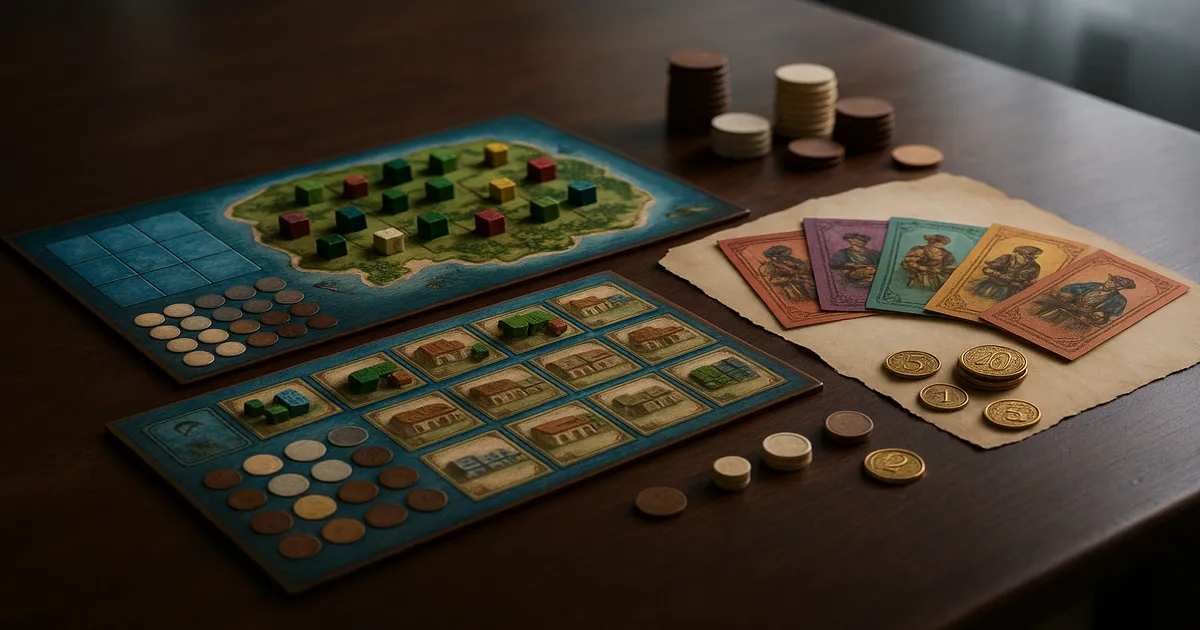
- Scenario boards and map overlays (new Loire region configurations)
- Event card decks (scenario-specific, drive the invasion narrative)
- Invasion tokens and markers
- New follower tokens (additional types beyond the base game)
- New building tiles
- Scenario booklet with rules for each scenario
- Additional goods tokens
- Campaign tracking sheet
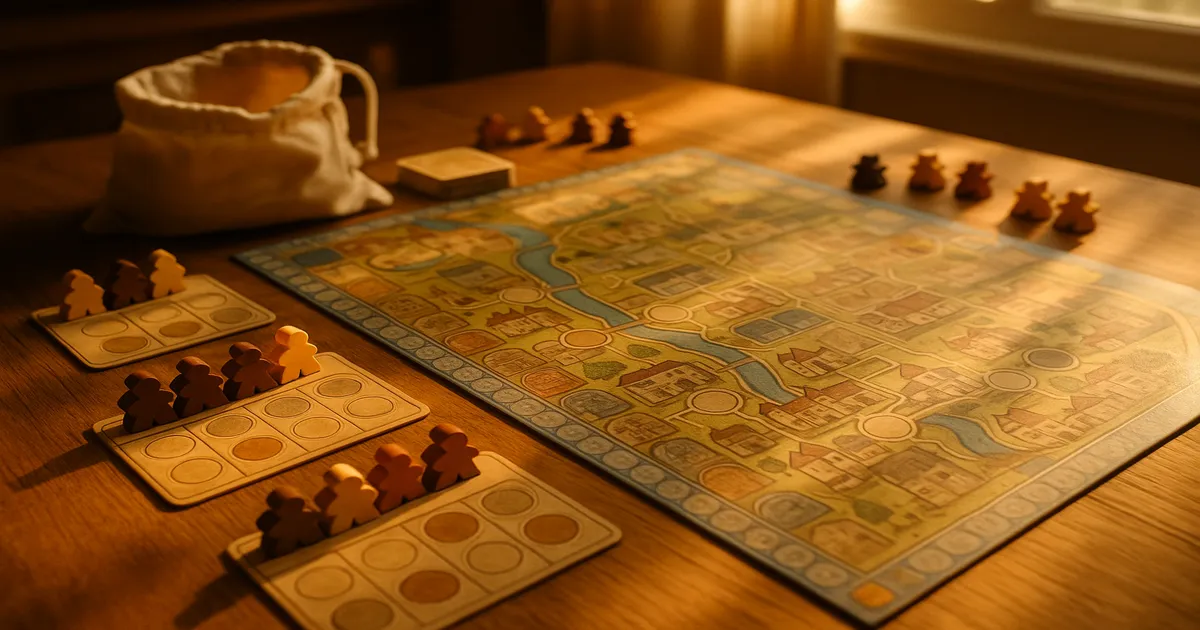
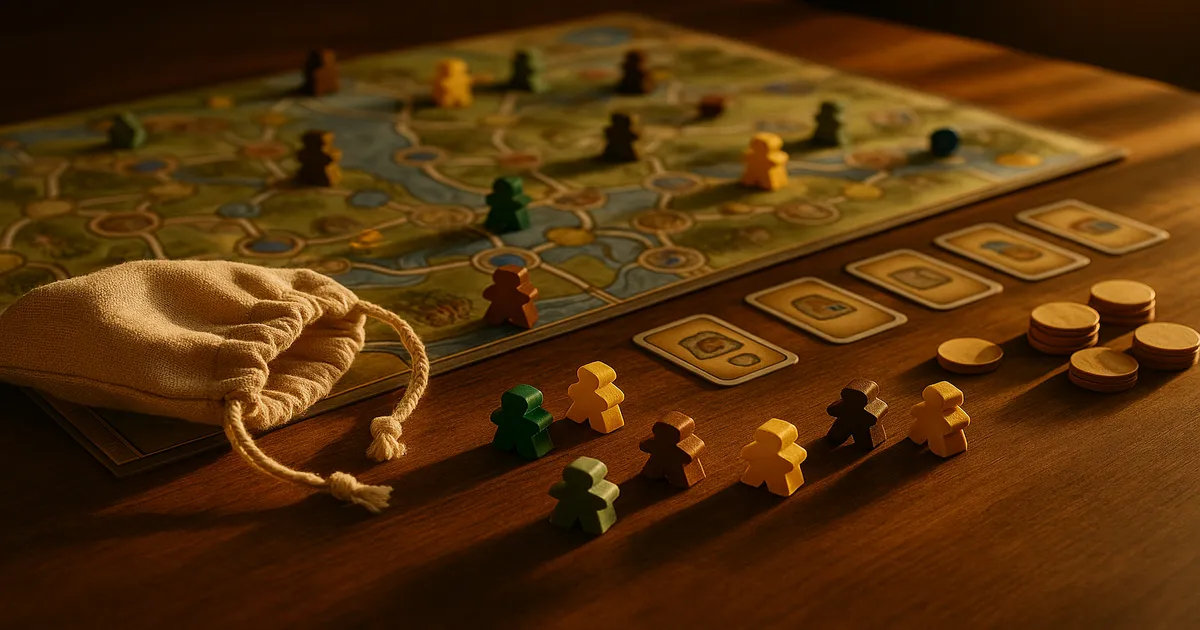
The wooden follower discs are chunky and satisfying — same tactile quality as the base game, which matters when you’re fishing around in a bag. Cards are standard linen-finish and sleeve easily.
One thing worth knowing before you sit down: the table footprint is significant. Central board, individual player boards, token pools, bags — clear your whole table. One accessibility note too: players with color vision deficiencies should check the invasion token differentiation before play, as some printings rely heavily on color contrast to distinguish token types.
The art style matches the base game seamlessly — same warm medieval cartographic aesthetic, same iconographic language. No jarring visual break between old and new components.
The Bag-Building Engine (A Quick Refresher)
If you’re coming to Invasion without having played Orléans in a while, here’s the core loop.
Every player has a personal cloth bag filled with follower tokens — knights, monks, farmers, traders, and others. At the start of each round, you draw a set number of tokens from your bag (how many depends on your development level). Those drawn tokens are your entire action budget for the round.
The elegance — and the anxiety — is that you can’t control exactly what you draw. You’re building a probability engine over the course of the game, shaping your bag so that future draws are more likely to give you what you need.
Your player board has action spaces, each requiring a specific combination of follower types. Place a knight and a farmer on the right space and you can travel. Place a monk and a trader and you can recruit. Followers placed on action spaces stay there until the cleanup phase — they don’t go back to your bag mid-round. This trips up new players constantly, because your available followers shrink as the round progresses. Order of activation matters.
The development tracks — science, trade, travel, and others — unlock escalating benefits that compound over time. New players consistently underestimate these tracks, treating them as optional when they’re really the backbone of your engine. Falling behind early is genuinely hard to recover from.
How to Play Orléans Invasion: Turn Structure and Scenario Types
Round Structure
Each round follows five phases:
- Event Phase — Draw and resolve an event card. In most Invasion scenarios, this escalates the invasion threat. Don’t skip this. Seriously.
- Planning Phase — Draw follower tokens from your bag (quantity determined by your development level).
- Action Phase — Place followers on your player board to activate actions: travel, recruit, build, trade, etc.
- Invasion Resolution — In cooperative scenarios, resolve invasion movement or attacks on the central board.
- Income/Cleanup Phase — Collect goods, advance markers, return all followers to your bag.
Cooperative Scenarios
This is Invasion’s headline feature, and it earns the billing. Players share a win/loss condition — defend enough towns, accumulate collective resources, survive a set number of rounds — while maintaining their own individual bags and player boards. You’re not merging economies; you’re coordinating strategies.
What makes the cooperation feel real rather than performative is the bag-building mechanism itself. You genuinely can’t promise you’ll draw the followers you need. That uncertainty forces honest communication rather than optimistic quarterbacking.
Competitive Scenarios
The competitive scenarios give you new map configurations and scenario-specific scoring that changes what’s worth pursuing. Some have asymmetric starting positions. The core bag-building engine is identical, but the destination is different — and that changes which tracks and actions deserve your attention.
Campaign Mode
The campaign strings scenarios into a sequence where outcomes carry forward. Strong performance earns you starting advantages in the next scenario; penalties compound if you ignore them. It adds a narrative dimension that’s genuinely unusual for a euro at this weight. Keep the campaign tracking sheet visible to everyone — it’s easy to forget persistent effects at setup, and getting that wrong is painful.
Common Mistakes When Learning Orléans Invasion
Rules errors that actually break the game:
- Skipping the Event Phase. This is the most common mistake, and it fundamentally breaks cooperative scenarios because the invasion never escalates properly.
- Returning followers to the bag mid-round. They stay on your player board until cleanup.
- Treating all scenarios as identical. Read the scenario booklet before every new scenario, not just the first time you open the box.
- Forgetting campaign carryover at setup.
Strategic errors that feel like rules problems:
- Bag bloat. Recruiting too many followers too fast dilutes your draw pool. Drawing six from a bag of seven is reliable. Drawing six from a bag of sixteen is gambling.
- Over-specializing on one track. It feels efficient until a scenario demands something you’ve neglected.
- Ignoring invasion escalation in co-op. The threat curve is exponential. A manageable situation in round 3 can become unwinnable by round 5. Don’t treat the invasion as background flavor.
- Reverting to competitive instincts in cooperative mode. Optimizing your personal engine at the expense of the group objective is how you lose together.
Strategy Tips for Orléans Invasion
Keep your bag lean. Eight focused followers will outperform fourteen random ones every time. The players who recruit aggressively in the first third of the game are usually the ones struggling to activate key actions when it matters.
Always read the scenario victory condition before you decide what engine to build. A scenario rewarding collective resource accumulation needs a completely different approach than one requiring map control.
In cooperative scenarios, assign roles early — even informally. Have one or two players lean into defensive and invasion-response actions while others build the economic engine. Trying to do everything collectively leads to nobody doing anything well. Watch the invasion track obsessively.
In competitive scenarios, identify the primary scoring vector and commit. Spreading thin across every track is comfortable but rarely winning. Watch what your opponents are recruiting — it tells you where they’re planning to go, and sometimes you can race them to a key track position or block a critical building.
In campaign mode, sometimes the right call is accepting a suboptimal result in one scenario to set up a powerful bonus for the next. The math doesn’t always favor winning every session individually.
Orléans Invasion vs. the Base Game and Other Expansions
| Feature | Orléans (Base) | Orléans Invasion |
|---|---|---|
| Cooperative Play | No | Yes |
| Scenario Structure | Single ruleset | Multiple distinct scenarios |
| Campaign Mode | No | Yes |
| Complexity | Medium-Heavy | Slightly higher |
| Replayability | High | Very High |
| Standalone? | Yes | No |
Trade & Intrigue is the other major expansion, and it goes in a completely different direction — new buildings, a treachery mechanism, and a sharper competitive edge. If Invasion adds cooperative depth and campaign structure, Trade & Intrigue adds competitive teeth. They’re complementary rather than competing, and many players run both together.
If you’re shopping for the base game first — and you should be, since Invasion requires it — Orléans itself is widely available and worth every penny.
Similar games worth exploring:
- Altiplano — also Stockhausen, more streamlined bag-building, good entry point to his design sensibility
- Clans of Caledonia — economic engine with spatial elements, excellent if Orléans’ medieval theme doesn’t grab you
- Architects of the West Kingdom — similar medieval feel, more accessible weight
What makes Invasion stand out from other “cooperative mode” add-ons is that the bag-building mechanism creates genuine uncertainty that makes coordination meaningful. Nobody can quarterback the whole group, because nobody knows exactly what they’ll draw. That’s not a limitation — it’s the design doing its job.
Frequently Asked Questions About How to Play Orléans Invasion
Do you need the base game to play Orléans Invasion?
Yes, absolutely. Orléans Invasion is an expansion, not a standalone. It requires the base game Orléans (2014) and adds no replacement ruleset — it layers new scenarios, event decks, and cooperative mechanics on top of existing components and rules.
How many scenarios are in Orléans Invasion?
The expansion includes multiple scenarios across cooperative and competitive modes, plus a campaign structure linking them. The exact count varies slightly by edition — check your scenario booklet. There’s enough variety that you won’t exhaust the content quickly, and each scenario plays differently enough to feel genuinely distinct.
Can you play Orléans Invasion with 2 players?
Yes, and it works well at two. Some scenarios are specifically adjusted for lower player counts. The cooperative scenarios at two players create a tight, focused experience — the invasion pressure doesn’t ease up just because there are fewer of you, which makes bag efficiency even more critical.
What’s the difference between Orléans Invasion and Trade & Intrigue?
Trade & Intrigue focuses on competitive play, adding new buildings, trading mechanics, and a treachery system that lets players interfere with each other more directly. Invasion adds cooperative scenarios and a campaign mode. They’re complementary — many players own both and combine them.
How does the campaign mode work?
The campaign links individual scenarios into a sequence where results carry forward. Strong performance can earn you bonus tokens or starting advantages for the next scenario; poor results may saddle you with penalties. A dedicated tracking sheet records these persistent effects between sessions. It’s not a legacy game — nothing is permanently altered — but it adds meaningful continuity across multiple plays.