Quick Answer: Dominion Adventures is a 2015 expansion for Dominion by Donald X. Vaccarino that adds Reserve cards, Events, and the Tavern Mat — three mechanics that reward planning and timing without changing the core deck-building loop. It requires the base Dominion game and supports 2–4 players, plays in 30–60 minutes, and sits at a BGG weight of ~3.1/5. No other expansions needed.
If you’ve got the base game down and you’re wondering how to play Dominion Adventures, here’s the short version: everything you already know still applies. You build a deck, cycle through it, race for Victory Points. Adventures just adds a layer of strategic depth — mostly through Reserve cards and Events — that makes the game feel meaningfully more complex without making you relearn the fundamentals.
What Is Dominion Adventures?
Adventures is, in a lot of people’s opinion, one of the best expansions Dominion ever got. The three headline mechanics are:
- Reserve cards — a new card type you place on a personal Tavern Mat when played, then “call” later to trigger their effect at exactly the right moment
- Events — purchasable one-time effects that never enter your deck; you spend coins during your Buy phase and get an immediate (or delayed) effect
- The Tavern Mat — a personal cardboard mat where your Reserve cards wait until you’re ready to use them
The BGG complexity sits around 3.1/5, which puts it on the heavier end for Dominion expansions. It’s not the place to start if you’ve never played Dominion before, but if you’ve got 10–15 base game plays under your belt, you’re ready.
What You Need to Play
Just the base Dominion game (either the original or Second Edition) and the Adventures box. No other expansions required.
What’s in the Box
Cards and Card Types
The box contains 400+ cards, including:
- 30 new Kingdom card piles — Reserve cards feature prominently, but there are also standard Action cards
- 20 Event cards — these sit beside the Supply and are never shuffled into piles
The Tavern Mat and Tokens
Each player gets their own Tavern Mat — the place where Reserve cards “lodge” while waiting to be called. The token set includes:
- Coin tokens — small cardboard chits worth +1 coin each that persist between turns
- Journey token — a double-sided token (face-up/face-down) that certain cards require you to flip
- Estate tokens, Trashing tokens, and a few others tied to specific card effects
Honest warning: the tokens are small cardboard punchouts and they will go missing. I keep mine sorted in small zip-lock bags by type. If you play regularly, upgrading to wooden or metal tokens is genuinely worth it.
Component Quality and Storage
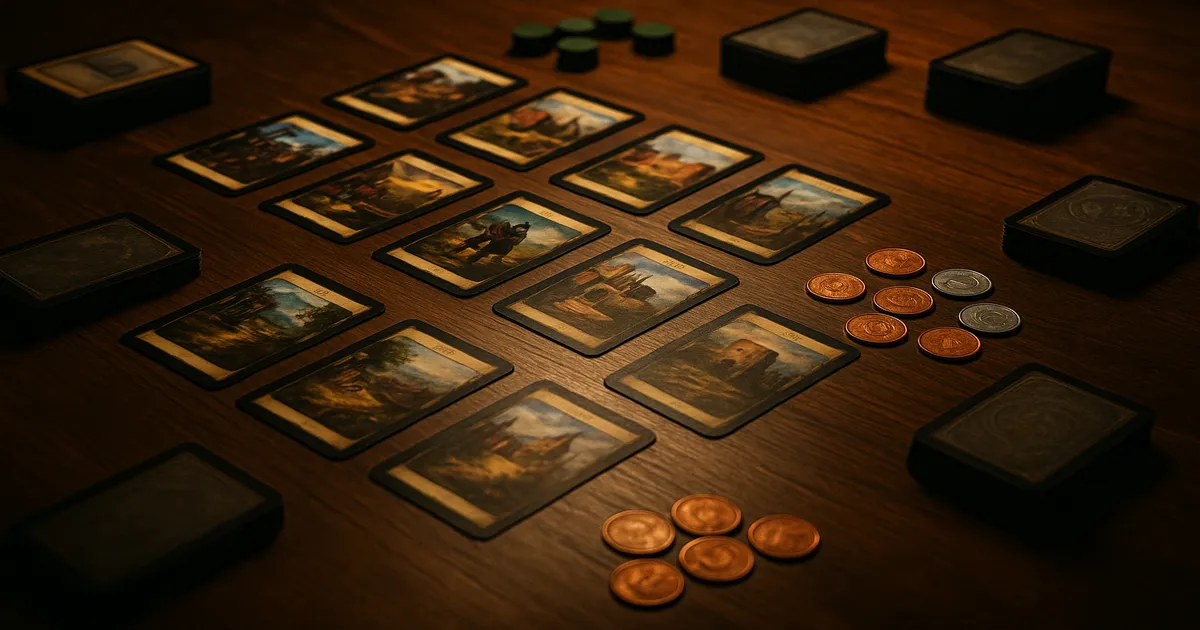
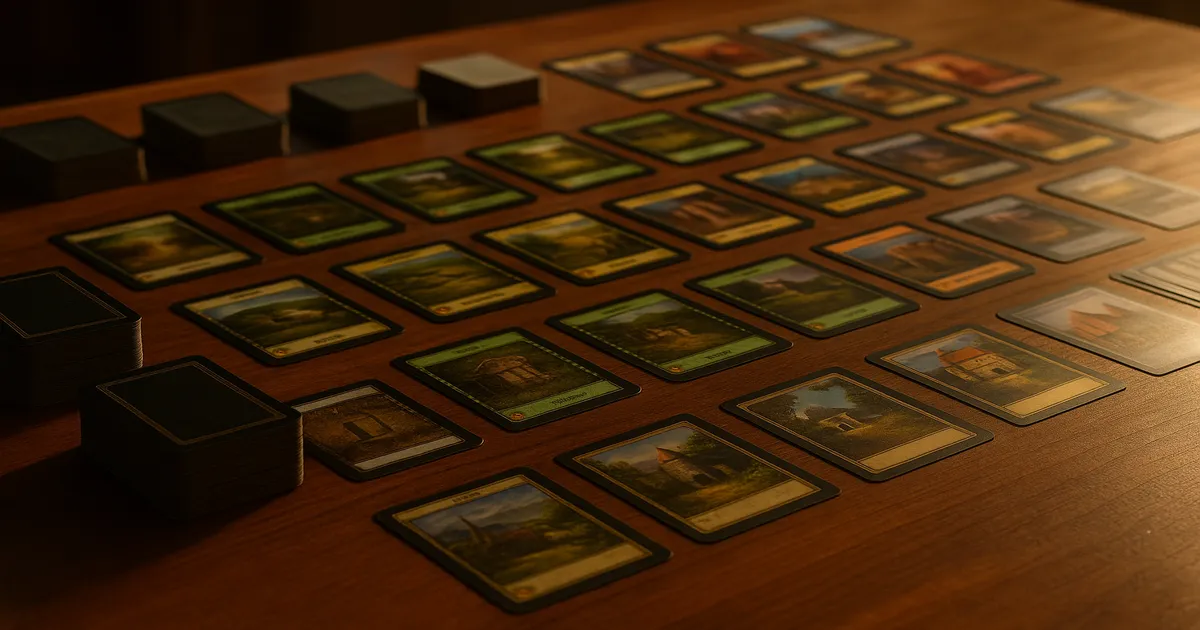
Card stock is standard Rio Grande — functional and sleeve-friendly, but not premium. The Tavern Mats are thin cardboard; they do the job, but some players upgrade to custom neoprene versions. Worth noting: Adventures has a noticeably larger table footprint than the base game. With 10 Kingdom piles, Events, and Tavern Mats spread around, you’ll want a big table.
How to Play Dominion Adventures: Core Rules Explained
Turn Structure
Adventures doesn’t change Dominion’s turn structure at all:
- Action Phase — Play Action cards from your hand. This is also when you can call Reserve cards from your Tavern Mat, if their trigger conditions are met.
- Buy Phase — Spend Treasure cards to buy Kingdom cards, Victory cards, or pay for Events.
- Cleanup Phase — Discard everything played and drawn, then draw a new hand of 5.
How Reserve Cards and the Tavern Mat Work
This is the mechanic that trips people up most. When you play a Reserve card, you don’t get its effect immediately — instead, you place it face-up on your Tavern Mat. The effect only triggers when you call it, at the specific moment the card describes (often the start of a future turn, or when a certain condition is met).
Think of it like setting a trap. You’re spending your Action now to bank a powerful effect for later. The timing of when you pull the trigger is where the real skill lives.
How Events Work
Events are not Kingdom cards. They never enter your deck. They sit in the Supply area as a permanent option — during your Buy phase, you spend coins to trigger an Event’s effect (trash a card, gain a card for free, draw extra cards next turn, etc.). You don’t take the card; you pay the cost and get the effect. Typically, you’ll include 2 Event cards per game alongside your 10 Kingdom piles.
Tokens and the Journey Token
Coin tokens are straightforward — bonus coins that persist across turns, which makes them quietly powerful in fast-cycling decks. The Journey token is trickier: it flips between face-up and face-down states, and certain cards care which side is showing when you play them. Tracking it matters more than it seems.
Win Condition
Identical to base Dominion: the game ends when the Province pile is empty or any three Supply piles run out. Most Victory Points wins.
Setting Up a Game of Dominion Adventures
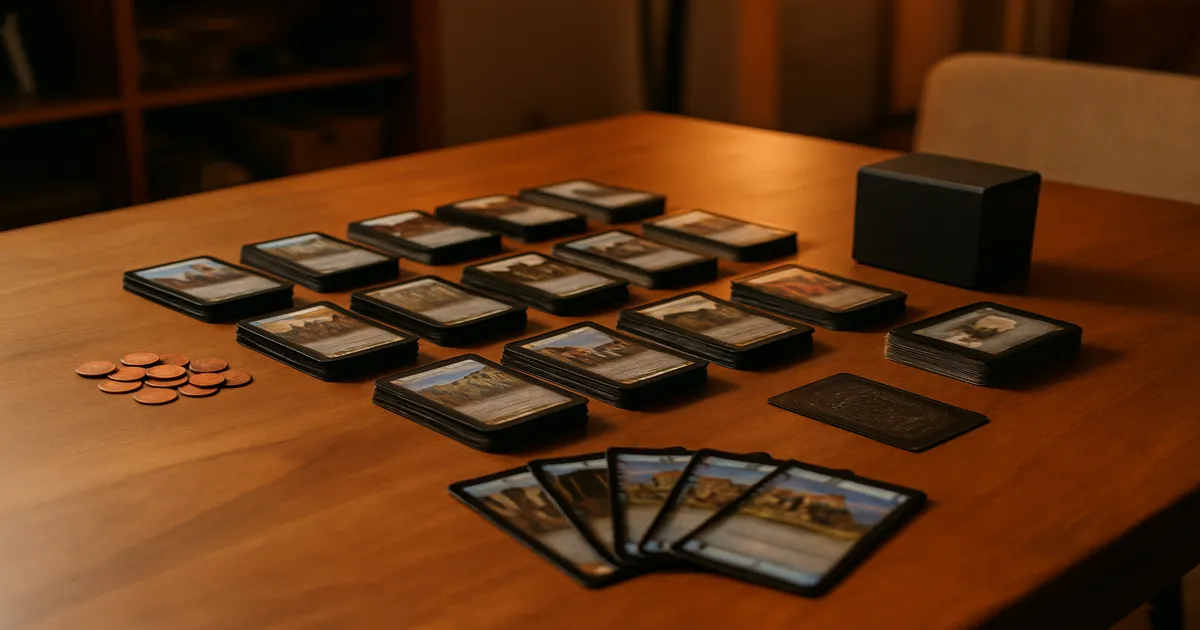
Select 10 Kingdom card piles as usual. For your first few Adventures games, mix familiar base cards alongside the new Adventures cards — going all-Adventures on your first run is a recipe for confusion. Pick 2 Event cards and set them beside the Supply, clearly separated from the Kingdom piles so nobody accidentally shuffles them in.
Give each player one Tavern Mat and a set of tokens. Put the Journey token near whichever card pile requires it and keep it visible — I’ve seen it get knocked under a mat and forgotten for half a game.
Common Mistakes New Players Make
Playing a Reserve card and expecting an immediate effect. Playing a Reserve card means placing it on your Tavern Mat. The effect comes when you call it later. Read the call trigger on each card before you play it.
Forgetting cards are sitting on the Tavern Mat. Make checking your mat part of your routine at the start of every turn. Takes five seconds, easy habit to build.
Trying to gain an Event card into your deck. Events never go into your deck. You pay the cost, get the effect, done. The Event card stays in the Supply for anyone to use again.
Buying Events every turn while your deck stagnates. Events are accelerants. They work best when you already have a deck strategy and you’re using Events to push it further — not when they’re your whole plan.
Losing track of the Journey token. Designate one player to own that responsibility, or place the token somewhere impossible to miss — on top of the relevant card pile works well.
Dominion Adventures Strategy Guide
Tips for New Players
Start simple: pick one or two Reserve cards and focus on learning when to call them rather than stacking five on your mat at once. Use Events opportunistically — if there’s a trash-for-benefit Event and you’ve got a Copper or Estate you hate, use it. But don’t build your whole game around Events.
Mixing familiar base cards into your first Adventures games isn’t just hand-holding — it’s genuinely good advice. Knowing how a Village or Smithy plays lets you focus on figuring out the new mechanics instead of everything at once.
Intermediate Tactics: Reserve Timing and Events
Reserve cards reward patience in a way most Dominion cards don’t. The best plays involve setting up your hand so that calling a Reserve card chains into other cards you’re holding — you’re not just activating an effect, you’re creating a sequence.
Events have a natural lifecycle across a game:
- Early: Trash-for-benefit Events to thin your deck faster
- Mid: Gain-a-card Events to accelerate your engine
- Late: Point conversion Events to squeeze out VP
Coin tokens are sneakily strong. In a fast-cycling deck, tokens that accumulate across turns can represent a massive burst of purchasing power right when you need it.
Advanced Play: Combos and Journey Token Manipulation
At a higher level, you’re building decks that reliably hit the calling conditions for your Reserve cards on most turns — not just occasionally. Ratcatcher (cheap, powerful trash-for-benefit Reserve), Distant Lands (a Reserve Victory card with a big payoff if you call it at the right moment), and Dungeon (discard and draw at the start of your next turn) all have well-documented synergies with base Dominion cards worth studying.
In 2-player games, Event denial is real. If your opponent is clearly building toward a specific Event, buying it yourself — even if you don’t need it — can be worth the cost.
Journey token planning is an advanced skill: certain cards flip the token, and you can sequence your plays to ensure it’s in the right state when you need it.
How Dominion Adventures Compares to Other Expansions
| Expansion | Key Mechanic | Complexity | Best For |
|---|---|---|---|
| Adventures | Reserve cards, Events, Tokens | High | Players who want planning depth |
| Intrigue | Choice-heavy cards, Victory/Action hybrids | Medium | Players who like decision density |
| Seaside | Duration cards | Medium | Players new to multi-turn planning |
| Prosperity | Treasure cards, Colony/Platinum | Medium-High | Big money strategies |
| Empires | Debt, Landmarks, Events | High | Adventures veterans |
| Hinterlands | On-gain effects | Medium | Reactive strategies |
If you have the choice, play Seaside before Adventures. Seaside’s Duration cards introduce the idea of cards that do things on future turns — a gentler on-ramp to the multi-turn thinking Adventures demands. Players who’ve done Seaside first tend to click with Reserve cards faster. Empires is the natural step after Adventures — it also uses Events and adds Landmarks (persistent scoring modifiers), building directly on the vocabulary Adventures teaches you.
The Reserve/Tavern Mat mechanic is genuinely unique in the deck-building genre. Star Realms is faster and more confrontational; Clank! adds a board and push-your-luck tension; Ascension is more random. None of them have anything quite like banking a card effect and choosing your moment to trigger it.
Frequently Asked Questions About Dominion Adventures
Do Event cards go into your deck?
No, never. You pay an Event’s cost during your Buy phase to trigger its effect, but the card stays in the Supply permanently. Think of it like paying for a service, not buying a product.
Can you call a Reserve card on the same turn you play it?
Only if the card’s text specifically says you can. Most Reserve cards require you to wait until a future turn or until a specific condition is met. When in doubt, read the call trigger — it’s always printed on the card.
Do you need other Dominion expansions to play Adventures?
No. Base Dominion plus the Adventures box is all you need. You can mix in other expansions if you have them, but it’s not required.
How many Events can you buy in a single turn?
One per Buy you have available. If you have two Buys, you could buy one Event and one Kingdom card, or two Events. Events compete with card purchases for your Buys, so spending them on Events is a real trade-off.
Is Dominion Adventures good for beginners?
It’s not ideal as a first expansion. Get comfortable with the base game first, then try Intrigue or Seaside before Adventures. Reserve cards and Event timing add enough complexity that new players often feel overwhelmed before they’ve had a chance to enjoy the mechanics. That said, if Adventures is what you’ve got, it’s absolutely learnable — just expect a steeper first session.