Quick Answer: The best Castles of Burgundy strategy comes down to four things: grab castle tiles early for extra actions, never let a die go to waste, complete regions before phase-end scoring kicks in, and specialise in one or two tile types rather than dabbling in everything. Skilled play consistently beats lucky rolling — the game gives you enough mitigation tools (worker tokens and silver) to work around bad dice almost every turn.
Castles of Burgundy is one of those games where the gap between a first-timer and an experienced player is enormous, and it shows up fast. If you’re hunting for the castles of burgundy best strategy, the short version is that tempo is everything — but there’s a lot of nuance underneath that. Let’s get into it.
The Best Castles of Burgundy Strategy: Core Principles
- Grab castles first — the extra action they provide snowballs through the whole game.
- Never waste a die — any roll can net you silver or workers if nothing else fits.
- Complete regions before phase end — bonus points are awarded per phase, not just at game end.
- Specialise — pick one or two tile types and build around them. Spreading thin leaves you with half-finished regions and no bonuses.
Why Castles of Burgundy Rewards Planning Over Luck
The dice create uncertainty, but the game hands you the tools to manage it. Worker tokens let you shift any die by ±1, and silver lets you buy tiles directly from the depot. Players who lose to “bad dice” are almost always players who hoarded their workers instead of spending them. The mitigation is there — you just have to use it.
Understanding the Game Before You Strategise
How Dice Drive Every Decision
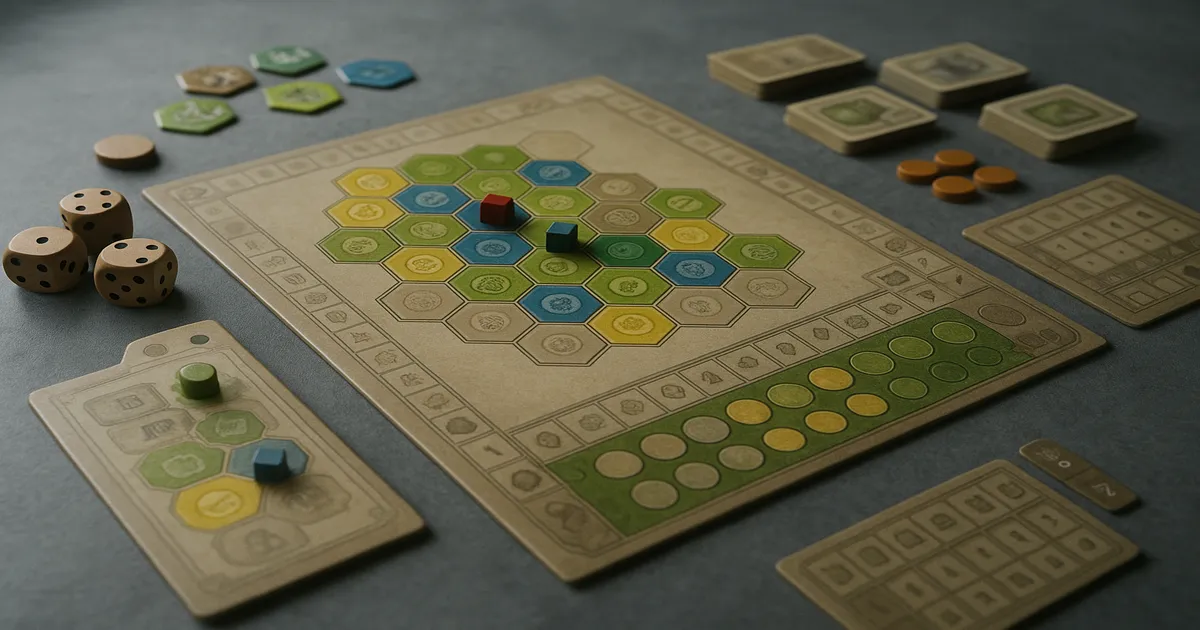
Each turn you roll two dice, and those numbers determine what you can do: which depot on the central board you can take tiles from, and which hex on your personal estate you can place tiles onto. The die value must match the number on the destination hex — not the tile type. This trips up a lot of new players.
The Two-Step Tile Flow: Storage to Estate
You can’t place a tile directly from the central board onto your estate in one action. It goes to storage first (one action), then onto your estate (a second action, that turn or a later one). Storage holds a maximum of two tiles, so if it’s full, you’re either forced into a placement or skipping pickups — neither of which you want.
How Scoring Works Across Five Phases
The game runs five phases, and at the end of each one, completed regions score bonus points. The earlier you finish a region, the more points you get — this scaling is steep enough that completing a region in phase two versus phase four can swing a dozen or more VPs. Final scoring adds points for remaining silver, workers, and certain tile types, but the real points are in those mid-game phase bonuses.
Opening Strategy: How to Start Strong
Read Your Estate Board Before Turn One
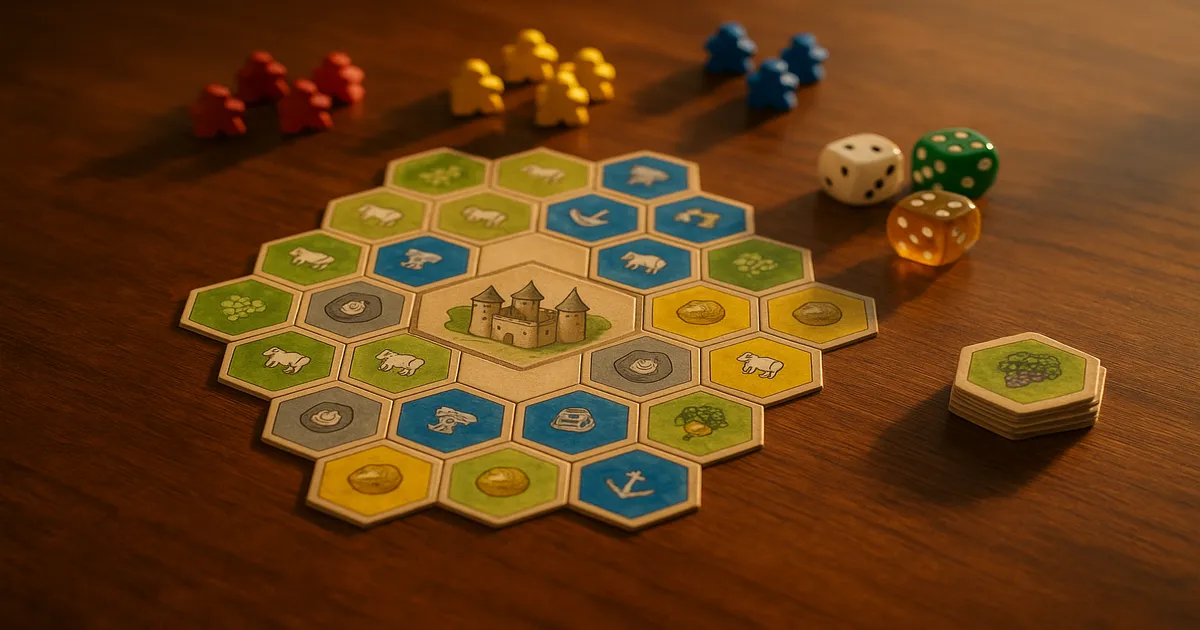
Spend a minute studying your board layout before the game starts. Identify which regions are smallest (easier to complete), which hex numbers appear most often (your dice will match those spaces more frequently), and which areas are adjacent so you can chain completions. Your whole early game should flow from this read.
Why Castles Should Be Your First Priority
Castle tiles give you an immediate extra action the turn you place them — three actions in a turn instead of two. Getting one or two castles down in the first couple of phases creates a compounding tempo advantage that’s very hard for slower players to overcome. Don’t wait for the “perfect” castle placement. Get them down.
Choosing Your Anchor Tile Type
Beyond castles, pick a primary tile category to build around. Mine tiles are worth calling out specifically: place one or two early and they generate passive silver income at the start of each phase. That silver funds workers, which funds flexibility. It’s a quiet engine that pays off all game long.
Castles of Burgundy Best Strategy for Dice Management
Never Waste a Die — Every Roll Has a Productive Use
Rolling a 3 when you need a 5 isn’t a disaster — it might mean you take silver or grab a worker token instead. Both are real resources. The only truly wasted turn is one where you convince yourself there’s nothing to do and pass. There’s almost always something.
When to Spend Worker Tokens (and When to Save Them)
Spend workers when timing matters, not just when it’s convenient. The classic beginner mistake is hoarding workers all game and converting them to VPs at the end — which is fine, but you’ve left a lot of points on the table by not using them to complete regions in the right phase.
Good rule of thumb: if spending a worker lets you finish a region this phase instead of next phase, spend it. The VP swing from that phase bonus almost always outweighs the end-game worker conversion.
Planning Two Actions Ahead Each Turn
Think of your two actions as a pair. Action one takes a tile to storage; action two places it on your estate. Or action one grabs a worker; action two uses it to adjust a die for a critical placement. Players who plan only one action at a time constantly find themselves with tiles stuck in storage or dice that don’t quite line up.
Mid-Game Strategy: Building Momentum
Completing Regions Early for Maximum Bonus Points
Don’t wait until you have the “perfect” set of tiles to finish a region. If you’re one tile away from completing a region in phase two, prioritise getting that tile even if something else looks slightly more appealing. The bonus points for early completion compound over the game — this is where most games are actually won or lost.
Selling Goods Tiles Strategically
Goods tiles score better when you sell a matching set. Selling one-off goods piecemeal gets you a trickle of silver but leaves points behind. Accumulate two or three matching goods before selling, and the payout is substantially better. I’ve seen players ignore this entirely and wonder why they’re 20 points behind at the end.
Ship Tiles: The Underrated Flexibility Booster
Ship tiles let you take tiles from any depot regardless of the die number. If your dice are consistently landing on numbers that don’t match the tiles you need, a ship or two in your estate quietly solves one of the game’s core frustrations. They’re not flashy, but they’re genuinely powerful.
Watching Your Opponents Without Losing Focus
Castles of Burgundy has low direct interaction, but you’re competing for tiles from the same central board. Keep half an eye on what opponents are collecting — if someone’s clearly building toward a goods set you could grab first, consider it. But don’t let blocking become your primary strategy. Points come from completion, not denial.
Advanced Tactics for Competitive Play
Building a Knowledge Tile Engine
Green knowledge tiles bend or break the normal rules — extra storage capacity, bonus VPs for specific placements, modified scoring conditions. Getting two or three complementary knowledge tiles in the early-to-mid game creates a snowball effect that’s hard to stop. In competitive play, experienced players target knowledge tiles as a primary strategy rather than treating them as incidental pickups.
Timing Region Completion Around Phase Boundaries
Here’s a counterintuitive one: sometimes you deliberately hold off on placing the final tile in a region until the very start of a new phase. It lets you claim first-completion bonus tiles at a point when opponents are less likely to have caught up. It requires counting turns carefully, but the payoff is real.
Estate Board Selection in Competitive Play
In a casual game, any board works fine. In competitive play, board selection matters. Some boards have large regions that reward mass tile placement; others have many small regions that favour fast completion bonuses. If you’re playing with a regular group, spend time learning the boards individually — knowing which board suits your preferred style is a genuine edge.
Common Mistakes That Cost You the Game
Rules Errors That Silently Hurt Your Score
- Placing tiles directly from the board to your estate — illegal. Always goes to storage first.
- Matching the die to the tile type instead of the hex number — the die matches the destination hex, full stop.
- Forgetting end-of-phase scoring — this happens more than you’d think, especially with new players.
Strategic Pitfalls Even Experienced Players Make
- Spreading across too many tile types. You end up with four half-finished regions and no bonuses.
- Letting storage fill up without a plan. Full storage forces suboptimal placements or missed pickups.
- Undervaluing castles. The extra action is worth more than almost any other tile effect in the game.
- Neglecting goods income. Silver from goods funds workers, and workers fund tempo.
Before each turn, ask yourself two questions: what’s the most important thing I can accomplish this phase, and what does my second action need to be to support that? That simple habit eliminates most of the strategic drift that costs players games.
Editions, Alternatives, and Player Counts
Original Edition vs. Anniversary Edition: Which Should You Buy?
The original edition’s components are famously underwhelming — small tiles, muted colours, a visual presentation that does the game no favours. The 2019 Anniversary Edition fixes most of this with larger tiles, a neoprene mat, better iconography, and all expansions included. If you’re buying fresh, get the Anniversary Edition. If you already own the original and love the game, the upgrade is worth it but not urgent.
How It Compares to Similar Games
Wingspan (BGG weight ~2.4) is lighter, faster, and more visually striking — a better gateway game, but it doesn’t have the same strategic crunch. Viticulture is more thematic and slightly more interactive. Agricola is heavier (~3.6 BGG weight) and more punishing — if you love Castles of Burgundy’s multi-path scoring but want more tension, it’s a natural next step.
Castles of Burgundy sits in a sweet spot: genuinely deep strategy without requiring expert-level rules knowledge to enjoy it from game one.
Best Player Count
Two or three players is the sweet spot. Two-player is faster and more competitive for tiles; three-player adds variety without too much downtime. Four players works, but the downtime between turns can drag and the tile market gets chaotic — some groups love that, others find it frustrating.
Frequently Asked Questions
What is the best strategy for beginners in Castles of Burgundy?
Focus on completing regions rather than collecting every tile type. Pick one or two tile categories, study your estate board before the game starts, and prioritise castle tiles for the extra actions they provide. Don’t hoard your worker tokens — spend them when they let you complete a region in the current phase.
How important are castle tiles?
They’re arguably the most powerful tile type in the game. Each one grants an extra action immediately when placed, which means more tiles taken, more regions completed, and more phase bonuses earned. Getting one or two castles down in the first couple of phases creates a tempo advantage that compounds all game.
When should you spend worker tokens?
Spend workers when the timing of a region completion matters — specifically, when using one lets you finish a region before end-of-phase scoring rather than after. The VP swing from that phase bonus almost always exceeds what you’d get from converting workers to points at game end.
Is Castles of Burgundy hard to learn?
The rules take about 20–30 minutes to explain, and the first game will feel wobbly — especially the two-step tile placement and the hex-number matching rule. By game two, most players have the flow down. It’s medium-heavy (BGG weight ~3.0), so it’s not a gateway game, but it’s far from impenetrable.
What player count is best?
Two or three players. Two-player is faster and more competitive for tiles; three-player adds variety without too much downtime. Four works but extends the game and increases tile market chaos, which is a matter of taste.