
Quick Answer: The best two player board games for couples are Patchwork (cozy, 15–30 min, perfect for beginners), Jaipur (fast trading card game, 30 min, great for date night), and 7 Wonders Duel (the #1 ranked 2-player game on BGG, 30 min, ideal for couples who want real depth). Start with Patchwork or Jaipur if you’re new to gaming; move to 7 Wonders Duel once you’re ready for more.
Finding the best two player board games for couples is easy. Finding the right one for the two of you? That takes a little more thought. The three games below cover a real range of complexity and mood — I’ve watched each of them become a regular fixture on couples’ game nights, and for very different reasons.
Best Two Player Board Games for Couples: Top Picks at a Glance
| Game | Play Time | BGG Weight | Best For |
|---|---|---|---|
| Patchwork | 15–30 min | 1.67/5 | New couples, casual nights |
| Jaipur | 30 min | 1.74/5 | Date night, quick sessions |
| 7 Wonders Duel | 30 min | 2.22/5 | Competitive couples, depth seekers |
All three are strictly 2-player designs — not 4-player games awkwardly squeezed down to two. They all run under 45 minutes, sit in BGG’s top tier for two-player play, and cover genuinely different themes. A cozy quilting game, a fast trading card game, and an ancient civilizations strategy game. Different couples want different things, and this list reflects that.
Patchwork: The Cozy Quilting Game Built for Two
2 players | 15–30 minutes | BGG weight 1.67/5 | Designer: Uwe Rosenberg
How Patchwork Works
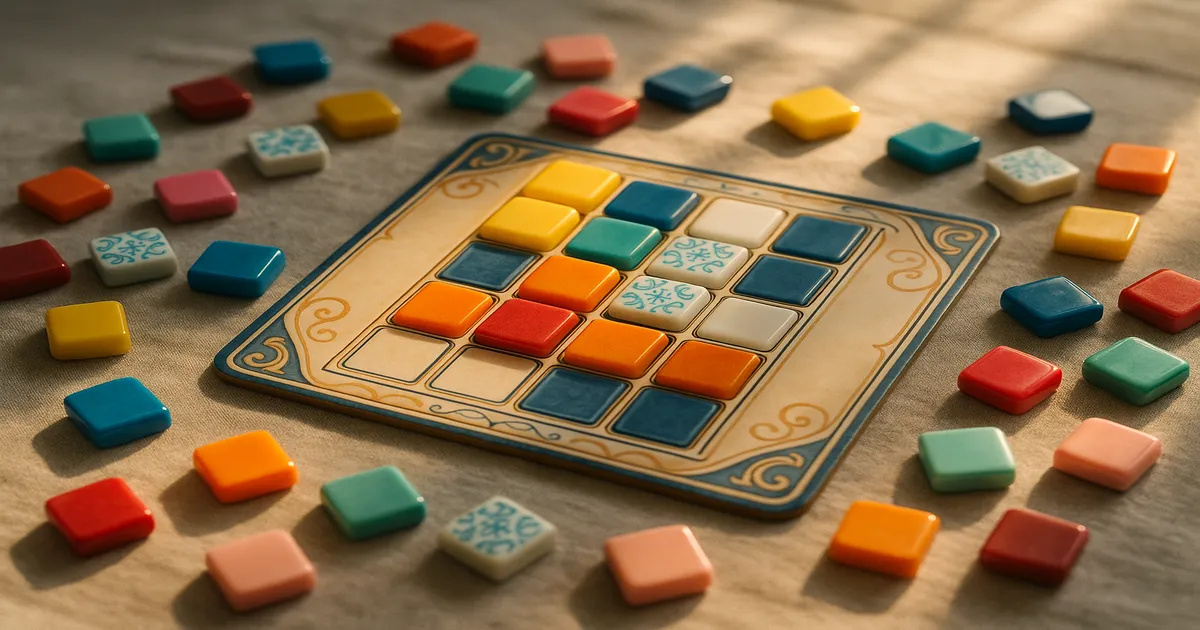
Patchwork is a tile-placement game where you and your partner compete to build the most complete and efficient patchwork quilt. A shared time track runs around the board, and both players move along it as they buy patches — but turns don’t strictly alternate. The player whose token is furthest back always goes next, which creates some genuinely interesting dynamics.
On your turn, you either buy one of the three patches immediately clockwise of a central marker (paying buttons and time) or pass to collect buttons and advance your token. Patches have button icons on them, and whenever either player passes certain spaces on the time track, you earn button income based on what you’ve already placed. It’s a clean, elegant loop that usually wraps up in under 30 minutes.
Why It Works for Couples
The quilting theme is genuinely charming — your board fills up with colorful fabric shapes, and there’s something satisfying about watching your quilt come together (or fall apart at the seams). At a BGG weight of 1.67, it’s approachable enough for someone who hasn’t touched a board game since Monopoly, but there’s enough real decision-making to keep experienced players engaged.
The small footprint is a practical bonus too. This plays comfortably on a coffee table with wine glasses in the way.
Strategy Tips for Beginners
- Prioritize button income early. Patches with multiple button icons are investments — they pay out every time you pass an income space. New players chase shapes; experienced players chase buttons.
- Contest the 7×7 bonus. A special tile worth 7 points goes to the first player to fill a complete 7×7 area on their quilt. In a game often decided by fewer than 10 points, this is a massive swing.
- Pass deliberately. If the three available patches are all wrong for your quilt, passing is often the correct move. You collect buttons and shift which patches become available.
The biggest beginner mistake is ignoring button income and grabbing patches that look like they’ll fit nicely. You’ll run out of money fast. The second is assuming turns alternate — once you understand the furthest-back-token rule, the whole game opens up.
One popular upgrade: swap the cardboard button tokens for real sewing buttons. Purely cosmetic, but it adds a lot of charm.
Jaipur: The Fast Trading Card Game That’s Perfect for Date Night
2 players | 30 minutes | BGG weight 1.74/5 | Designer: Sébastien Pauchon
How Jaipur Works
You and your partner are rival merchants competing to impress the Maharaja. A shared market of five cards sits between you. On your turn, you either take cards from the market or sell cards from your hand. Selling earns you goods tokens — but the highest-value tokens go first, so timing matters enormously. You can also grab camels, which don’t count toward your 7-card hand limit and can be exchanged in bulk for market cards later. First to win two of three rounds takes the game.
Why It’s a Great Date Night Game
It fits in a bag. It plays in 30 minutes. Setup takes about two minutes, and the theme is accessible to anyone. The current edition has linen-finish cards and thick, satisfying tokens — it feels like a premium product and usually costs around $25–30. I’ve brought this to restaurants and played it while waiting for food. It’s that portable.
When to Sell and When to Wait
The central tension in Jaipur is timing your sells. Sell too early and you miss the bonus tokens for selling four or five cards at once. Sell too late and your opponent depletes the high-value token stacks before you.
- Luxury goods (diamonds, gold, silver) depreciate fast. Sell them while top-tier tokens remain.
- Bulk leather sales can surprise you. Leather tokens are individually weak, but selling five or more earns a substantial bonus.
- Camels aren’t useless. The player with the most camels at round end earns a 5-point bonus, and a big camel hoard enables powerful multi-card exchanges.
The classic mistake is sitting on four diamonds waiting for a fifth while your opponent takes all the high-value tokens. The other one is playing just one round and calling it a game. The best-of-3 structure is integral to the design — a single round can swing on luck, but a full match rewards skill.
7 Wonders Duel: The #1 Ranked Two Player Board Game on BGG
2 players | 30 minutes | BGG weight 2.22/5 | Designers: Antoine Bauza & Bruno Cathala
How It Works
Cards are laid out in a pyramid structure at the start of each Age — some face-up, some face-down, flipping as blocking cards are taken. On your turn, you take one available card and either build it, discard it for coins, or use it to construct one of your Wonders. Three Ages of drafting, then final scoring.
What makes this game special is the three distinct win conditions. You can win by pushing the military pawn to your opponent’s capital (instant victory, mid-game), by collecting six different science symbols (also instant), or by simply having the most points after Age III. All three paths are viable, and all three require your opponent to pay attention.
Why Competitive Couples Love It
The card denial mechanic is what elevates this above most two-player games. Taking a card your opponent desperately needs — even if it’s not great for you — is a legitimate and often correct strategy. Every single turn has real tension. There’s a reason it’s been sitting at #1 on BGG’s two-player rankings for years.
If you want to add more variety once you’ve played it a dozen times, the Pantheon expansion adds a mythology layer that changes the strategic calculus significantly.
Strategy Tips
Don’t ignore military. I’ve watched so many new players dismiss the conflict pawn entirely and lose to a sudden military supremacy they never saw coming. Even if you’re not pursuing a military win, you need to keep that pawn out of your territory.
Science is a legitimate threat even when you’re not going for the instant win. Collecting four or five symbols forces your opponent to react and pulls them away from their own strategy. Build Wonders for their abilities first and their point values second — some grant extra turns or let you steal progress tokens, and timing those can be decisive.
Common beginner mistakes:
- Missing free chain builds. When a card’s chain symbol matches something you already own, you can build it for free. New players miss this constantly and overpay.
- Hoarding coins. Coins only score in sets of three (1 point each). Don’t accumulate them at the expense of building.
- Ignoring progress tokens. These science-bonus tiles are extremely powerful and often sit unclaimed by players who don’t know what they do.
How to Choose the Right Two Player Board Game for Your Relationship
Matching Complexity to Your Experience Level
If neither of you has played hobby board games before, start with Patchwork or Jaipur. Both teach in under 10 minutes and deliver satisfying, complete experiences right away. 7 Wonders Duel has a steeper initial curve — the iconography looks daunting at first — but it becomes intuitive after one or two plays.
Competitive vs. Cooperative: What Works Best for Couples?
All three games here are competitive, which works well for couples who enjoy a bit of rivalry. If you’d prefer working together against the game, look at Pandemic or Codenames Duet instead. That said, most couples handle competitive games just fine as long as they’re short — a 30-minute loss stings a lot less than a 2-hour one.
Theme Matters More Than You Think
A quilting game, a trading card game, and an ancient civilizations strategy game appeal to very different people. If your partner has zero interest in ancient history, 7 Wonders Duel is going to be a harder sell regardless of how good it is. Match the theme to your tastes and you’ll actually get the game to the table.
Building a Collection as a Couple
A solid starting collection doesn’t need to be large. Aim for variety: one quick filler (Jaipur or Patchwork), one medium-weight competitive game (7 Wonders Duel), and one cooperative option for when you’d rather work together. Three games you both genuinely enjoy will always beat a shelf of twenty you never play.
Where to Go Next: Games to Try After These
If you love Patchwork: Azul is the natural next step — abstract tile placement with more direct competition and a gorgeous table presence. Cottage Garden (also by Rosenberg) keeps the polyomino feel. Isle of Cats goes much deeper if you’re ready for a longer session.
If you love Jaipur: Hanamikoji is shorter and more brutal — two-player card game, under 15 minutes, genuinely tense. Lost Cities scratches a similar itch with a different risk structure. Targi is heavier, uses grid-based worker placement, and has a trading theme that Jaipur fans often love.
If you love 7 Wonders Duel: Twilight Struggle is the logical escalation — a two-player Cold War game that’s one of the most acclaimed strategy games ever made, though considerably longer. Agricola: All Creatures Big and Small offers deep two-player worker placement in a farming theme. For something cooperative, Codenames Duet is excellent and plays in 15 minutes.
Frequently Asked Questions
What’s the best two player board game for couples who’ve never played hobby games before?
Patchwork. It teaches in about five minutes, plays in 15–30, and the quilting theme is approachable for anyone. Jaipur is a close second — the card game format feels familiar even to non-gamers, and a full best-of-3 match wraps up in 30 minutes.
What if one of us is way more competitive than the other?
Patchwork handles this particularly well. The game is short enough that losing doesn’t feel punishing, and the decisions are visible enough that a less experienced player can understand why they lost and improve quickly. Jaipur’s best-of-3 format also gives the trailing player a natural comeback path.
How long do these games actually take?
Patchwork runs 15–20 minutes once you know the rules — it’s genuinely a “one more game” experience. Jaipur’s best-of-3 runs about 30 minutes total. 7 Wonders Duel is also around 30 minutes but feels more substantial. If you have 20 minutes before a show, Patchwork. If you have a full evening, any of them.
Is 7 Wonders Duel really the #1 rated two player game?
As of 2024, yes — it holds the top spot in BoardGameGeek’s two-player rankings. It’s earned it through genuine strategic depth, meaningful decisions on every turn, and three distinct win conditions that keep every game feeling different.
Do board games actually help couples bond?
Genuinely, yes — and not just because it’s a shared activity. Games create low-stakes situations where you’re both making decisions, reading each other, and reacting in real time. Learning a new game together, or building a rivalry over dozens of plays, creates a kind of shorthand that’s hard to replicate elsewhere. It’s one of the reasons couples who game together tend to keep doing it.